
Making Names
EC Chi
Founder, CEO & President, KoreaTexas Forum
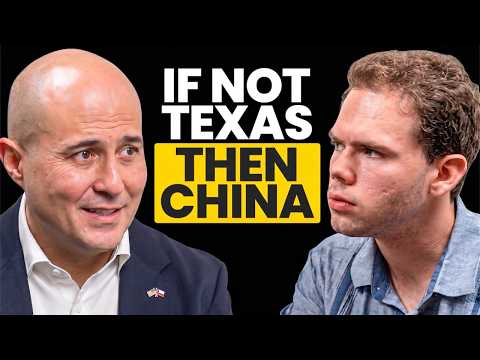
EC Chi joins DSE Media to discuss Korean investment in Texas beyond semiconductors, cross-cultural education, site selection, workforce expectations, advanced manufacturing and the human work of building lasting business relationships.
In her words
“Korea is not about semiconductor.”
“Don’t put all of your eggs in one basket.”
“Our role is to bring that gap closer.”
“Embrace it. Let’s go there. Let’s find out what the state can offer and learn.”
“Let’s put everything down and see what we can do.”
What we talked about
From mechanical engineering to multinational business
Chi began in mechanical engineering and entered the connector industry as a sales engineer managing multinational accounts. The role required technical fluency and the ability to work across companies whose manufacturing operations stretched into multiple countries.
That combination—engineering detail, sales, operations and cross-border coordination—became the foundation for work that now connects Korean companies with Texas communities.
Why the work continued after Samsung Taylor
Chi previously helped Korean companies explore Central Texas through the Williamson County Economic Development Partnership. When that assignment ended amid delays surrounding Samsung's Taylor project, she believed the broader initiative still needed to continue.
KoreaTexas Forum grew from that conviction. Samsung's investment created an important semiconductor ecosystem, but Chi saw a larger opportunity that should not depend on a single company or sector.
Korea is bigger than semiconductors
Korean industry includes aerospace and defense, energy, biopharma, artificial intelligence, automotive manufacturing and many other advanced sectors. North Texas and the Port of Houston already host significant Korean energy activity, while Central Texas can compete for a wider set of projects.
Chi is especially interested in aerospace and defense. Companies such as Hanwha operate across shipbuilding, aerospace and defense systems—capabilities that align with strategic priorities in both Texas and the United States.
Education on both sides of the deal
KoreaTexas Forum explains why Texas should be a top U.S. location, then helps Korean investors understand how Texas actually works. Permitting, construction schedules, site selection and local-government processes may take longer or follow a different sequence than companies expect in Korea.
The education also runs in the other direction. Texas communities need to understand the pace, expectations and operating culture of Korean companies. A project can stall when either side assumes its familiar system is universal.
The cultural broker between two systems
South Korea fits a population much larger than Texas into a far smaller area. Dense cities, extensive public transportation and short distances shape everyday expectations. A Korean executive arriving in a sprawling Texas region may find that basic travel, housing and community services work differently.
Chi's role extends beyond the commercial transaction. Companies ask about schools, Korean food, transportation and daily life because employees have to imagine living in the place where the factory will operate. Communities need to answer the human questions as seriously as the incentive questions.
Workforce cannot stay theoretical
Chi uses transformer manufacturing to show why a generic workforce promise is not enough. A high-voltage transformer can take about a year to produce. The work may involve lifting and stacking heavy metal plates, winding copper by hand and repeating physically demanding tasks with precision.
Training can take six months or more, while global demand has created multi-year order backlogs. Before promising labor availability, economic developers need to see the factory, understand the actual work and design recruitment, training, housing and retention around its realities.
What it takes to host advanced manufacturing
Korean manufacturers may use extensive benefits, housing or dormitories to retain workers in demanding roles. Automotive, transformer and defense projects can each require specialized training and very different working conditions.
Texas communities do not have to copy the Korean model. They do need to understand what the investor is trying to solve and put the company's concern beside the local workforce system's capabilities. The useful conversation begins when both sides stop speaking in hypotheticals.
Building bridges that last beyond one project
KoreaTexas Forum supports companies evaluating Texas and communities that want to engage them. Its work provides market insight, process guidance and direct connections to local partners.
Chi is also developing a foundation side focused on cross-border education, technology sharing and activities beyond immediate commerce. The long-term mission is to build durable bridges through business, innovation and partnership—not simply close a single transaction.
About EC Chi
EC Chi is the founder, CEO and president of KoreaTexas Forum, an organization connecting Korean companies with Texas communities through economic development, relationship building and strategic engagement.
KoreaTexas Forum helps Korean companies evaluate U.S. market entry and Texas expansion while helping cities, counties and economic-development organizations build visibility and coordinated relationships with Korean investors.
Chi's background includes more than three decades across sales, operations and marketing in global manufacturing and technology businesses, along with work supporting Korean foreign direct investment in Central Texas.
KoreaTexas Forum →About KoreaTexas Forum →EC Chi on LinkedIn →
More from the series
Three more conversations about international investment, workforce and Texas economic development.


We build shows like this for Texas organizations
Making Names is our own. The work below belongs to clients: recurring programs, branded, filmed, edited, and published on a schedule that holds.
How a town of 7,000 built a channel with a national audience →Standing up an EDC podcast from zero →
Book a free strategy callWant the rest of the conversations? Browse every episode →