
Making Names
John-Michael Cortez
Head of Government & Community Affairs, South and Southwest · GFiber
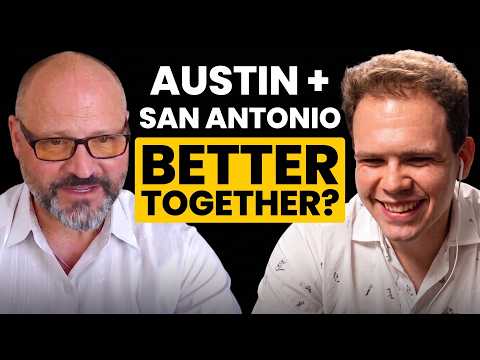
John-Michael Cortez joins Making Names to discuss GFiber, municipal partnerships, community engagement, Central Texas growth and regional transportation. Produced by DSE Media.
In his words
“You know, I think that trust is the most critical foundation to doing anything big and meaningful.”
“But we had to go slow first before we could go fast.”
“You know, our problems are not necessarily their problems.”
“If they do a better job, it will be better for us too.”
What we talked about
Trust starts with showing up
For John-Michael Cortez, community engagement starts with being present. As GFiber’s head of government and community affairs for the South and Southwest, he works across communities with different priorities and histories. In this Making Names conversation, he explains why a face-to-face meeting offers something that email and virtual calls cannot fully replace. Body language, eye contact and the effort of showing up help establish a relationship before a difficult decision arrives. He sees that investment as a foundation for collaboration, not simply a courtesy at the beginning of a project.
Infrastructure is a long-term relationship
Building a network in an existing neighborhood means working around homes, streets and other utilities. Cortez compares that process to performing open-heart surgery on a community. Even careful work can encounter unexpected conditions or leave a resident with questions. His argument is that trust makes it easier to address those problems together. He points to Round Rock as an example of taking time to align expectations before accelerating construction. The lesson is not that every deployment will follow the same schedule, but that moving quickly can depend on doing slower relationship-building work first.
Understand the municipality’s problem
Cortez’s experience inside local and regional government shapes how he approaches private-sector partnerships. He describes local government as a way for people to solve shared problems they cannot address alone. A company entering that environment needs to respect the community’s responsibilities and goals. When an internal team encounters a municipal obstacle, he asks them to look beyond the company’s inconvenience: what problem is the city trying to solve? That shift helps frame an offer around local needs. It also requires listening, adapting and renewing relationships when public leadership changes.
Growth does not stop at a city boundary
Turning to Central Texas, Cortez describes growth beyond Austin’s city limits and the pressure that puts on neighboring communities. He sees housing, water, infrastructure and public services as connected regional challenges. Rather than expecting each city to work everything out independently, he hopes communities with more experience managing growth will help those encountering similar pressures now. He also welcomes wider cooperation between Austin and San Antonio. These are his observations and priorities from the interview, not a prediction that every place will grow in the same way or a formal regional plan.
Make progress in useful pieces
The conversation closes with transportation along the Austin–San Antonio corridor. Cortez sees potential value in a rail connection, while distinguishing trips between the two cities from shorter commuter journeys within each region. He suggests that useful segments could be worth pursuing while work on a larger connection continues. It is an incremental approach offered for discussion, not an announcement of an approved route or project. Across both infrastructure and transportation, his emphasis is consistent: understand the people affected, build relationships that can withstand setbacks and find practical ways to move forward.
About John-Michael Cortez
John-Michael Cortez leads government and community affairs for GFiber’s South and Southwest regions. His work includes relationships with communities in the Austin–San Antonio corridor, the Nashville area and Huntsville, Alabama. With experience in local and regional government, he brings a public-service perspective to infrastructure deployment and municipal partnerships. In this interview, he discusses the importance of trust, local knowledge and collaboration as communities plan for growth.
More from the series
More conversations about local government, community engagement and the future of Central Texas.
We build shows like this for Texas institutions
Making Names is our own. Explore our client work to see how we help Texas organizations produce recurring shows.
See our work with Luling EDC →See our work with Pflugerville PCDC →
Book a free strategy callWant the rest of the conversations? Browse every episode →