
Making Names
Dean Huard
Senior Consultant, Strategic Partnerships, Inc.
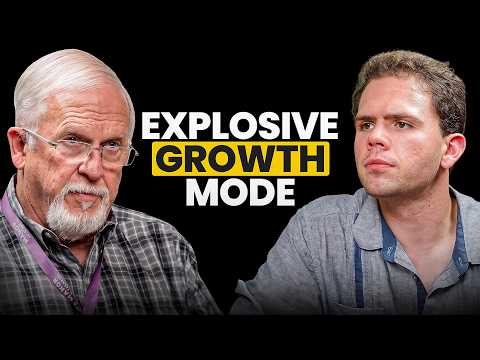
Dean Huard, Senior Consultant at Strategic Partnerships, Inc. in Austin, Texas, a retired U.S. Army lieutenant colonel and former city manager, in conversation with DSE Media for the Making Names interview series. DSE Media is a video, podcast, and social media production company in Austin, Texas that works with Texas cities, economic development corporations, and public institutions.
In his words
“Every department in city government would benefit from having a veteran.”
“Every base has a base commander, which acts kind of like a city manager. Actually, it’s the exact same mission.”
“You don’t get rich in local government, and that’s not why you’re there.”
“Then I realized that there’s more to serving than just red and blue.”
“I, as a leader, was never the subject matter expert.”
What we talked about
Thirty-four years, then a city hall
Dean Huard opens with a resume so compressed it sounds like a joke: thirty-four years in the Army, thirteen of them in the Guard and Reserve, active duty after 9/11, then city manager of a small suburb west of Austin, then a consulting firm. He got commissioned in 1991 through ROTC at the University of Oregon. His father was in the Coast Guard, so he grew up all over the country, finished high school in San Diego, and landed in a small town on the Oregon coast called Coos Bay, where he first got involved in local government as student body president of the community college.
That community college is not a throwaway detail in his telling. It is where he learned that you can make a difference in a small place, and where he picked up the phrase he still uses about being a big fish in a small pond. He transferred to the University of Oregon, ran a dorm as an RA, joined ROTC, and commissioned into the Guard.
Then 9/11. His reserve unit was activated and he spent two years stateside training Individual Ready Reserve soldiers headed to Iraq. He was living in Palm Springs at the time, and he went home and told his wife he wanted to go active duty full time. He notes, drily, that they are still married. Twenty years of active duty followed, with deployments, and he retired in 2023 out of Fort Hood.
A base commander is a city manager
The structural insight at the center of this episode is one that most people in local government have never heard articulated, and it is the reason the episode exists. Every military installation has a base commander. That commander’s job is, in Huard’s words, the exact same mission as a city manager’s: run the day-to-day operations of a community with utilities, housing, emergency services, budgets, and thousands of people in it.
He extends the analogy to the political side. A commander commands, roughly the way a mayor sets policy. His last active-duty job was brigade executive officer, or chief of staff, which meant running the staff and making sure things actually got done. That is the city manager’s job description with different vocabulary.
His broader argument goes further than his own path. It is not just retired lieutenant colonels with political science degrees and an MPA who should look at city hall. The signal soldier should look at municipal IT. The soldier doing personnel work should look at municipal HR. They are the same jobs. Every department, he says, would benefit from having a veteran.
The fellowship, and what Georgetown taught him
The mechanism he used is the ICMA-sponsored Veterans Local Government Management Fellowship, a Department of Defense SkillBridge program that places transitioning service members inside a city for a few months at no cost to the city. He did his with the City of Georgetown while still stationed at Fort Hood, and he is unreserved about it: he is a Georgetown supporter because of the people, the network, and the chance to see good governance up close.
What he saw there was culture and teamwork, not process. His read is that because nobody gets rich working in local government, a city has to give people a reason to care and to feel part of the governing process. He credits the staff, the mayor, and the council together rather than singling out an administration, and he says he has seen the same thing elsewhere in Central Texas, but that Georgetown sits at the top for him.
His practical advice for anyone applying to a city is one sentence long and worth more than most job-search advice: make sure you are going to work for a city that believes in good governance.
Civility as a leadership skill, not a nicety
Asked what he sees in leaders worth emulating, he starts with civility, which is not the answer most people give. He was asked to contribute an essay to a book on the subject, writing from the perspective of a veteran and a former city manager, and he takes the position that civility is a component of good governance rather than a decoration on top of it.
Pressed on what he actually means, his definition is deliberately basic: how you treat other people, and having respect for them. He pairs it with emotional intelligence, self-regulation, self-management, motivation, and social skills, and he makes the case that any city manager will agree, because the job tests all of it every time the manager sits down with a council and a mayor.
He also has a phrase of his own for the moments that pulled him toward service. He calls them capital dome moments, after the scene in Mr. Smith Goes to Washington where Jimmy Stewart’s character sees the dome for the first time. He knows how idealistic it sounds and says so before anyone else can.
Red and blue, and what he learned to leave behind
His first job out of college was managing two campaigns for the Oregon state legislature, and for a while politics pulled him off the city management track he had trained for. His conclusion, delivered without any edge to it, is that there is more to serving than just red and blue, and he now pushes the staff around him to take local government seriously as a way to serve rather than treating federal and state work as the only real arenas.
He tells one story that captures how invisible the job is. Back at Fort Hood, someone asked him what it was like being the mayor. He is not the mayor. The mayor makes policy; the city manager runs operations. That distinction, which is the entire basis of the council-manager system most Texas cities use, is genuinely unknown to most residents.
What SPI actually does
Strategic Partnerships, Inc. was founded roughly thirty years ago by Mary Scott Nabers, a former Texas Railroad Commissioner, around a gap she saw between companies and the public sector. Huard describes the firm as functioning in essence as another arm of a corporation’s business development team, helping commercial clients navigate procurement and decision-making at state agencies, cities, counties, school districts, and higher education institutions.
His answer for why that is hard is honest rather than salesy. Public sector procurement looks intimidating if you have not spent years inside it. A lot of the companies he works with are building genuinely useful technology, increasingly AI, and cannot find the door. He describes his own role as a connector, and the version of the work he seems to actually care about is the part where a city ends up with a tool it needed.
The part he did not have to tell us
Late in the conversation, asked how he stays mentally tough between chapters, he brings up the health crisis that followed his time as city manager: a six-millimeter clot that traveled to his brain and took away his ability to speak. The line he pairs it with is the one that stays with you afterward. Good follows grief.
He volunteered all of it, on camera, in a conversation that had until then been about org charts and procurement. It is the reason this episode is not simply a case for hiring veterans.
About Dean Huard
Dean A. Huard is a Senior Consultant at Strategic Partnerships, Inc., an Austin-based business development, government affairs, and procurement consulting firm, where he helps commercial clients work with state agencies, cities, counties, school districts, and higher education institutions.
He is a retired U.S. Army lieutenant colonel with thirty-four years of service across the Guard, the Reserve, and active duty, including overseas deployments, and he retired out of Fort Hood in 2023. Before joining SPI he served as city manager of the Village of the Hills, Texas, a community of roughly 2,600 people west of Austin. His path into municipal management ran through the Planning and Zoning Commission in Nolanville, the Central Texas Council of Governments Leadership Academy, and the ICMA Veterans Local Government Management Fellowship with the City of Georgetown. He holds a degree in political science and a master’s in public administration, and he contributed an essay on civility and veteran leadership to a published collection.
More from the series
Three more conversations with the people running Texas cities.


We build shows like this for Texas institutions
Making Names is our own. The work below belongs to clients: recurring programs, branded, filmed, edited, and published on a schedule that holds.
How a town of 7,000 built a channel with a national audience → Standing up an EDC podcast from zero →
Book a free strategy callWant the rest of the conversations? Browse every episode →